
One City, Two Systems: Inside New York's Micromobility Divide and the Road to 2029
[MICROMOBILITY PRO]New York's micromobility is split in two: Citi Bike in the core, Lime, Bird and Veo in the outer boroughs. With Lyft's contract expiring in 2029, the model is up for debate.
Welcome to Micromobility Pro, a bi-weekly publication which is part of The Micromobility Newsletter, where we deep-dive into the financials of micromobility companies and share exclusive insights tailored for professionals and members.

The micromobility industry is heading to the Palace of Fine Arts for Micromobility America 2026 on November 11-12 for two days of the people, ideas, and conversations shaping what’s next.
!!!Limited tickets available at $399 - Sale Ends in 2 days! (15th August)
Join Bosch, AliExpress, Minimal, Christensen Group, Nilan Johnson, Veo, Drop Mobility, Urban Sharing, Point One Navigation, Cogo, Mahalo, Mayten and many others!
Not sure what’s the right partnerhip opportunity for you? We now have a chatbot on micromobility.io to ask your questions.
[Sponsor/Exhibit] | [Speak at the Event] | [Get A Free Pass] | [Exhibit as a Startup]
🤫 Check Micromobility Europe 2027, Berlin - 29-30 June 2027 - Prelaunch tickets are live now!
Contents
Introduction
Chart: Citi Bike and Other City Bike Shares Annual Membership Prices, 2025
Two Systems, One Map
How Citi Bike was Built
What Riders Pay
Chart: Nominal and Inflation-Adjusted Citi Bike Annual Membership Prices
Chart: Cost of a 15-minute E-Bike Trip for Citi Bike Users
Chart: Citi Bike and Other Programs: Price for a 15-Minute Single Ride
Where the Money Goes
Chart: Citi Bike Revenue by Source
The Affordability Push
The E-Scooter Question
Chart: Lime E-Scooter Trips Beginning and Ending in the Bronx
The Equity Programs
The Choices Ahead of 2029
Introduction

New Yorkers take tens of millions of trips a year on shared two wheelers. What they ride depends almost entirely on where they are standing. Across Manhattan and much of Brooklyn, Queens, and the Bronx, it is a docked Citi Bike, owned and operated by Lyft under an exclusive contract with the city. In the East Bronx and eastern Queens, it is a dockless e-scooter from Lime, Bird, or Veo, operating in zones the city drew specifically so they would not overlap with Citi Bike’s territory. Two systems, four operators, one hard border between them.
In 2026, both halves of that map came under pressure at once. Citi Bike is having its best year on record, and it is also, according to the city’s Independent Budget Office, the most expensive major bike share system among peers in the United States, Canada, and Europe, and the only one among them running with no public subsidy.
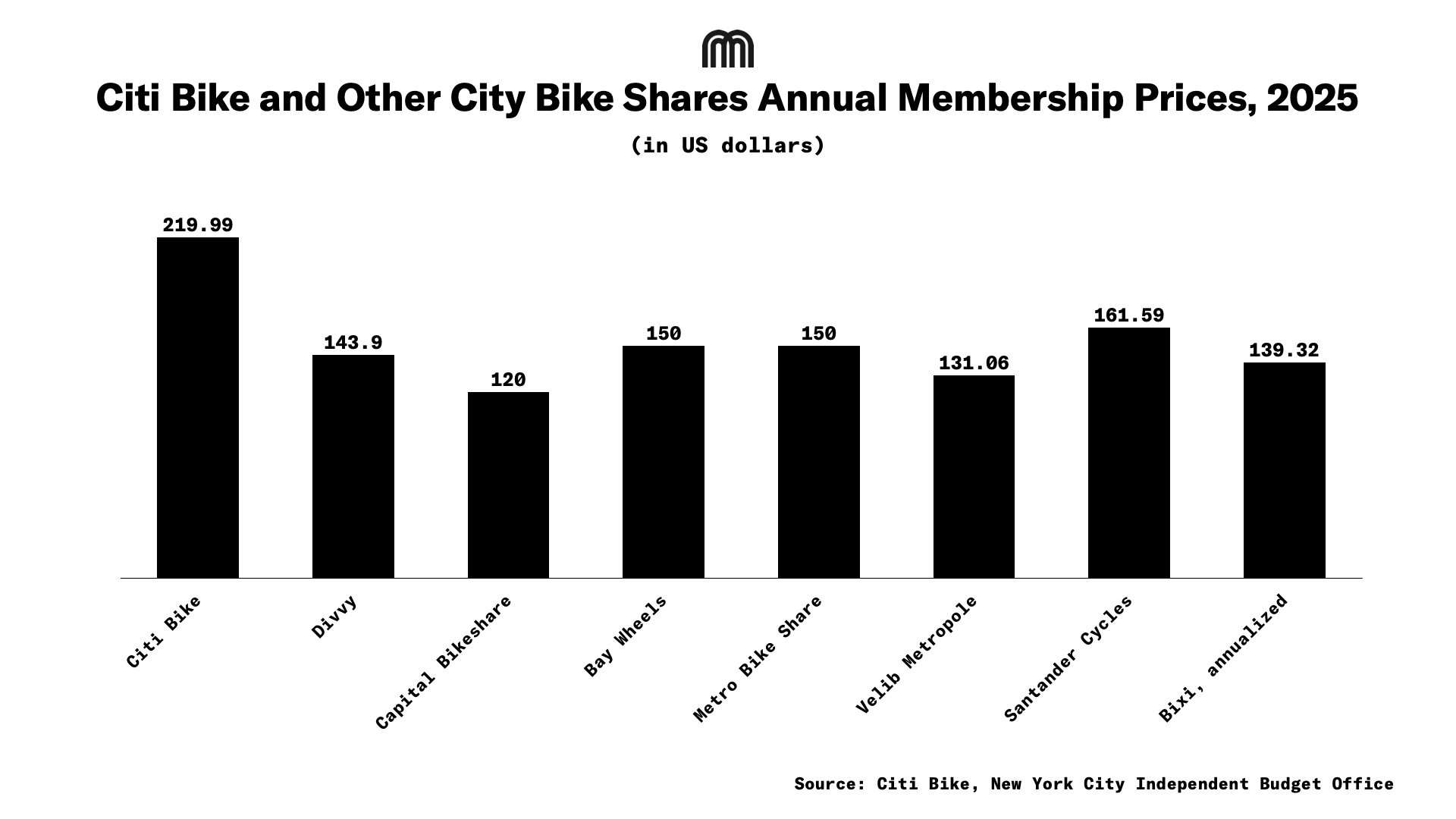
Prices rose again in January, the fifth consecutive year of increases. Advocacy groups launched a campaign to cap e-bike fares and formed a Citi Bike riders union, and a City Council bill would tie bike share prices to the subway fare. On the scooter side, Lime, newly listed on Nasdaq, is citing a study it sponsored at NYU’s Rudin Center for Transportation as it asks Mayor Zohran Mamdani’s administration to let e-scooters expand beyond their two zones, and eventually across the city.
